
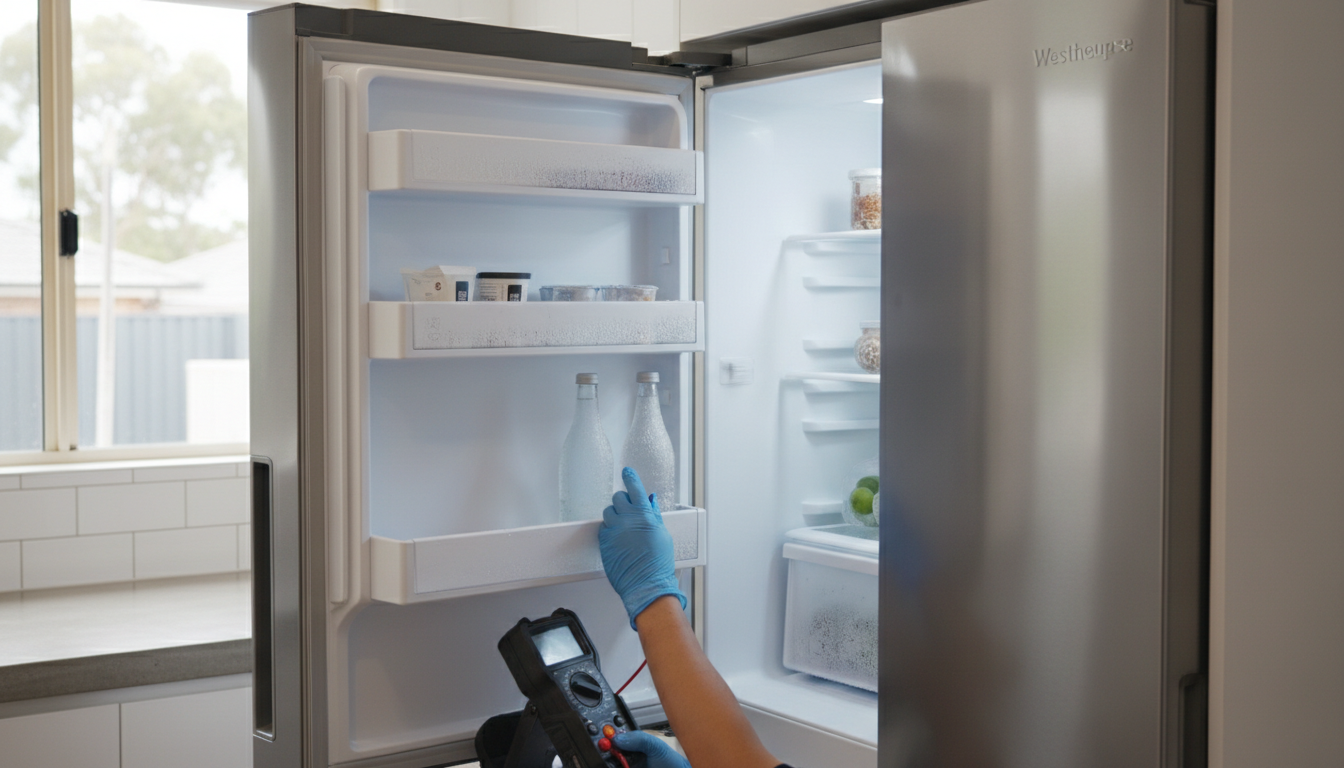
Westinghouse fridges develop predictable fault patterns tied to component wear cycles and design characteristics common across this Australian brand. Homeowners across Sydney suburbs from Parramatta to Penrith and Bondi to Blacktown notice the same progression: compressor noise followed by cooling loss, thermostat cycling issues causing temperature swings, evaporator fan motors that grind before failing completely. Understanding how these faults develop helps you distinguish between a simple thermostat replacement and a more complex refrigerant system issue requiring professional Westinghouse fridge repair. According to Choice, refrigerators have an average lifespan of 10-13 years in Australian households, with component failures accelerating after year 8. The Australian Bureau of Statistics reports that 99.9% of Australian households own a refrigerator, making fridge breakdowns one of the most disruptive appliance failures. This explainer details the technical progression of common Westinghouse faults, what components fail first, and when repair remains cost-effective under the statutory guarantees of acceptable quality provided by the Australian Consumer Law (ACL) Schedule 2 of the Competition and Consumer Act 2010 (Cth).
Why Westinghouse Fridges Develop Specific Fault Patterns
Westinghouse fridges share component suppliers and design architectures across model ranges, which creates predictable fault sequences. The compressor, thermostat, evaporator fan motor, and defrost system components age at similar rates across different Westinghouse models, meaning a five-year-old Westinghouse fridge in Sutherland experiences similar wear patterns to one in Ryde. Component degradation follows mechanical and electrical wear cycles rather than random failure. Compressor valve seats wear from repeated pressure cycling, thermostat contacts oxidise from electrical arcing, evaporator fan motor bearings dry out from continuous operation, and door seals harden from temperature cycling and UV exposure. These wear patterns become fault symptoms at predictable intervals, typically between years five and ten of operation. Understanding this progression helps homeowners recognise early warning signs before complete component failure occurs, often reducing repair costs and preventing food spoilage from sudden cooling loss.
Compressor Failure and Refrigerant Loss in Westinghouse Models
Compressor failure in Westinghouse fridges typically begins with valve seat wear rather than complete motor burnout. The compressor contains intake and discharge valves that open and close thousands of times daily as refrigerant cycles through the sealed system. Over years of operation, these valve seats develop microscopic pitting and wear that prevents complete sealing. When valves fail to seal properly, refrigerant bypasses from the high-pressure discharge side back to the low-pressure intake side during the compression stroke. This internal leakage reduces refrigerant pressure in the evaporator coil, diminishing cooling capacity without any external refrigerant loss. You notice the fridge running constantly but maintaining temperatures 2-4 degrees above setpoint, with the compressor feeling warm but not cycling off as it should. This valve degradation progresses gradually over months, often mistaken for thermostat failure because temperature control becomes erratic before cooling fails completely.
Refrigerant loss from sealed system leaks represents a separate failure mode, typically occurring at brazed joints where copper tubing connects to the compressor, condenser coil, or evaporator coil. Westinghouse fridges use R600a refrigerant in most models manufactured after 2010, which operates at lower pressures than older R134a systems but remains equally susceptible to leak development at mechanical joints. Vibration from compressor operation and thermal expansion cycles stress these joints over years, eventually creating pinhole leaks that allow refrigerant to escape. Unlike valve wear, refrigerant leaks cause rapid cooling loss once the charge drops below the minimum operating threshold. The compressor runs continuously, feels hot to touch, and may cycle on the overload protector as it attempts to compress insufficient refrigerant. Sydney Appliance Services provides detailed compressor failure diagnosis and repair options for all Westinghouse models, including refrigerant leak detection and sealed system repairs using genuine replacement components.
Important:
Thermostat and Temperature Control Failures
Thermostat failure in Westinghouse fridges develops through contact oxidation and calibration drift rather than sudden electronic failure. Mechanical thermostats use a gas-filled capillary tube connected to a bellows that expands and contracts with temperature changes, operating electrical contacts that switch the compressor on and off. These contacts arc each time they open under electrical load, gradually building up oxidation that increases contact resistance. As resistance increases, the contacts require greater force to close reliably, which shifts the temperature differential at which the compressor cycles. You notice the fridge temperature fluctuating 3-5 degrees around the setpoint, with longer compressor run times followed by extended off periods. Food in the crisper section may freeze while items on upper shelves remain too warm, indicating the thermostat is cycling at incorrect temperature thresholds.
Electronic temperature control boards in newer Westinghouse models use NTC (negative temperature coefficient) thermistors instead of mechanical thermostats, but these develop different fault patterns. The thermistor resistance changes predictably with temperature, and the control board interprets this resistance to determine when to activate the compressor. Thermistor failures typically manifest as open circuits or resistance drift outside the expected range, causing the control board to misread cabinet temperature. The fridge may run continuously because the board interprets the faulty thermistor signal as indicating excessive warmth, or it may fail to start the compressor at all if the thermistor reads as an open circuit. Distinguishing between thermostat failure and other cooling faults requires systematic diagnosis, which our guide on hidden causes when your fridge runs but doesn’t cool explains in detail. Thermostat and thermistor replacement represents one of the most cost-effective Westinghouse fridge repairs, typically restoring proper temperature control within the same service visit.
Evaporator Fan Motor Degradation
Evaporator fan motor failure in Westinghouse fridges follows a predictable progression from bearing noise to complete motor seizure. The evaporator fan circulates air across the evaporator coil and throughout the fridge and freezer compartments, operating continuously whenever the compressor runs. This constant operation wears the motor bearings, which are typically sleeve bearings lubricated with oil that gradually dries out in the low-humidity freezer environment. Initial bearing wear produces a rhythmic clicking or grinding noise that occurs whenever the compressor cycles on, often more noticeable at night when ambient household noise decreases. This noise indicates the motor shaft is no longer centred properly in the bearing, causing the fan blade to contact the housing or creating vibration that resonates through the cabinet. As bearing wear progresses, the noise intensifies and the motor draws increasing current as friction increases, eventually tripping the motor’s thermal overload protector or causing the motor windings to overheat and fail.
Complete evaporator fan motor failure causes distinct cooling symptoms that differ from compressor or thermostat faults. The freezer section maintains adequate temperature because it sits closest to the evaporator coil, but the fridge compartment warms significantly because no airflow carries cold air from the freezer to the fresh food section. You notice frozen items remain solid while milk and vegetables spoil, and the compressor runs continuously attempting to compensate for inadequate air circulation. Ice buildup on the evaporator coil accelerates once the fan stops, because static air allows frost to accumulate rather than sublimating into the circulating airflow. Understanding what different fridge noises indicate helps identify evaporator fan motor failure before complete seizure occurs, often allowing repair before food spoilage becomes significant. Sydney Appliance Services replaces evaporator fan motors with genuine Westinghouse parts across all Sydney suburbs, restoring proper airflow and temperature distribution during the same service visit.
Door Seal Deterioration and Air Leakage
Door seal deterioration in Westinghouse fridges occurs through plasticiser loss and compression set rather than visible tearing or damage. The door gasket uses flexible PVC or rubber compounds that contain plasticisers to maintain elasticity across the temperature range from freezer cold to room temperature. These plasticisers gradually migrate out of the seal material through evaporation and UV exposure, particularly along the top edge of the door where warm air rises and sunlight may reach the seal. As plasticiser content decreases, the seal becomes progressively harder and less compliant, losing its ability to conform to minor irregularities in the door frame and cabinet surface. You notice condensation forming on the exterior cabinet surface near the door, increased frost buildup inside the freezer, and higher compressor run times as the fridge works harder to compensate for warm air infiltration. The door may feel slightly easier to open because the magnetic strip no longer compresses the seal as tightly against the cabinet.
Compression set represents another seal failure mode where the gasket permanently deforms in areas of high stress, typically at the corners and hinge side where door closing force concentrates. The seal develops flat spots that no longer spring back to create an airtight closure, allowing air leakage even when the magnetic strip pulls the door firmly closed. Energy Rating Australia notes that faulty door seals and defrost systems can increase refrigerator energy consumption by 15-25%, often the first indicator of developing faults. Testing door seal integrity requires only a simple visual check: close the door on a piece of paper and attempt to pull it out—if the paper slides out easily at any point around the door perimeter, the seal has lost compression and requires replacement. This represents one of the early warning signs of appliance failure that homeowners can identify before energy costs increase significantly or cooling performance degrades noticeably.
Defrost System Failures and Ice Buildup
Defrost system failures in Westinghouse fridges typically involve the defrost timer, defrost heater element, or defrost thermostat rather than control board faults. The defrost cycle operates on a timer that interrupts compressor operation every 8-12 hours, activating a heater element mounted beneath or around the evaporator coil. This heater melts frost accumulation on the coil fins, allowing meltwater to drain through a tube into an evaporation pan beneath the fridge. The defrost thermostat monitors evaporator coil temperature and terminates the defrost cycle once the coil reaches approximately 10 degrees Celsius, preventing excessive heating that would warm the freezer compartment. When the defrost timer fails, it may stop advancing through the defrost cycle, leaving the compressor running continuously without periodic defrost intervals. Ice gradually builds up on the evaporator coil, blocking airflow and reducing cooling efficiency until the coil becomes completely encased in ice and cooling stops entirely.
Defrost heater element failure produces similar symptoms but through a different mechanism. The heater element develops breaks in the resistance wire from repeated thermal cycling between freezer temperature and defrost temperature, eventually creating an open circuit that prevents any heating during defrost cycles. The timer advances normally and the defrost thermostat functions correctly, but no heat reaches the evaporator coil to melt accumulated frost. Ice buildup progresses more slowly than with timer failure because the compressor still cycles off during defrost periods, but frost accumulation continues with each cooling cycle. You notice thick ice forming on the back wall of the freezer compartment, reduced cooling performance, and potentially water leaking from the freezer as ice buildup blocks the defrost drain tube. Defrost thermostat failure represents the third common defrost system fault, typically failing in the closed position so the heater runs for the full timer cycle rather than terminating when the coil reaches proper temperature. This wastes energy and may cause temporary warming of the freezer compartment during extended defrost cycles, but it rarely causes ice buildup because the heater still operates.
Control Board and Electronic Component Faults
Control board failures in Westinghouse fridges develop through capacitor degradation, solder joint cracking, and relay contact failure rather than microprocessor faults. The main control board regulates compressor operation, defrost cycling, fan motor control, and user interface functions through a printed circuit board containing electrolytic capacitors, electromagnetic relays, and integrated circuits. Electrolytic capacitors have limited service lives determined by operating temperature and electrical stress, typically rated for 2000-5000 hours at maximum rated temperature. In the warm environment above the compressor where control boards mount, these capacitors gradually lose capacitance and increase equivalent series resistance as the electrolyte dries out. Reduced capacitance affects power supply filtering and timing circuits, causing erratic operation such as compressor short-cycling, display flickering, or complete failure to start. Visual inspection often reveals failed capacitors by bulging tops or electrolyte leakage around the base, though electrical testing provides definitive diagnosis.
Relay contact failure represents another common control board fault, particularly in the compressor start relay that switches mains voltage to the compressor motor. These relays cycle thousands of times annually, with electrical arcing at the contacts gradually eroding the contact surfaces and building up oxidation. Eventually the contacts fail to close reliably or weld together in the closed position, either preventing compressor start or causing continuous compressor operation without thermostat control. Solder joint cracks develop from thermal cycling and vibration, particularly at heavy components like transformers and large capacitors that experience mechanical stress. Cracked solder joints create intermittent connections that cause unpredictable faults—the fridge may operate normally for hours then suddenly stop, resuming operation after the board cools or vibration temporarily restores the connection. Control board replacement requires matching the exact board part number to your Westinghouse model, as boards are not interchangeable between different model ranges even when they appear physically similar.
When to Call for Professional Westinghouse Fridge Repair in Sydney
Professional diagnosis becomes necessary when safe homeowner checks fail to identify the fault or when symptoms indicate component failure requiring qualified repair. You can safely check whether the fridge has mains power, whether the temperature control dial moves freely, whether the door closes properly and the interior light operates, and whether excessive ice buildup blocks the freezer vents. These checks eliminate simple causes like tripped circuit breakers, accidentally adjusted temperature controls, or door seal issues that prevent proper closure. Beyond these visual and functional checks, fault diagnosis requires electrical testing, refrigerant system pressure measurement, and component testing that must only be performed by qualified technicians. Understanding when Westinghouse fridge faults require same-day repair helps you assess urgency based on symptoms and food spoilage risk.
Certain fault symptoms indicate urgent repair needs that justify same-day service to prevent food loss. Complete cooling failure where both fridge and freezer compartments warm to room temperature within 4-6 hours represents a critical fault requiring immediate attention, particularly during Sydney’s summer months when ambient temperatures accelerate food spoilage. Refrigerant leaks producing a chemical odour, compressor overheating with repeated thermal cutout cycling, or electrical burning smells from the control board area all indicate faults that pose safety risks beyond simple food spoilage concerns. The Australian Consumer Law (ACL) Schedule 2 of the Competition and Consumer Act 2010 (Cth) provides statutory guarantees that goods will be of acceptable quality and fit for purpose, which includes reasonable durability based on the product type and price paid. Westinghouse fridges experiencing component failures within the first five years of normal use may qualify for repair or replacement under these statutory guarantees, regardless of manufacturer warranty status. The Australian Competition and Consumer Commission (ACCC) provides guidance on consumer rights for appliance repairs, emphasising that consumers can choose their own repairer rather than being restricted to manufacturer service networks. Following the immediate steps when your fridge stops working helps preserve food and prepare useful diagnostic information before the technician arrives.
By the Numbers
- STATAccording to Choice, refrigerators have an average lifespan of 10-13 years in Australian households, with component failures accelerating after year 8
- STATThe Australian Bureau of Statistics reports that 99.9% of Australian households own a refrigerator, making fridge breakdowns one of the most disruptive appliance failures
- STATEnergy Rating Australia notes that faulty door seals and defrost systems can increase refrigerator energy consumption by 15-25%, often the first indicator of developing faults
Frequently Asked Questions
What are the most common Westinghouse fridge problems?
Compressor failure, thermostat malfunction, evaporator fan motor failure, and door seal deterioration are the most frequent Westinghouse fridge faults. Compressor valve wear causes gradual cooling loss while refrigerant leaks produce rapid temperature rise. Thermostat contact oxidation creates temperature cycling issues, and evaporator fan motor bearing wear progresses from noise to complete airflow failure. Under the Australian Consumer Law (ACL) Schedule 2 of the Competition and Consumer Act 2010 (Cth), these faults may be covered by statutory guarantees of acceptable quality if they occur prematurely relative to the appliance age and price paid. Sydney Appliance Services diagnoses and repairs all Westinghouse models across Greater Sydney with same-day service availability, using genuine replacement parts and providing comprehensive repair warranties.
How long should a Westinghouse fridge compressor last?
A Westinghouse fridge compressor typically lasts 10-15 years under normal operating conditions, according to industry standards for domestic refrigeration compressors. Premature compressor failure within the first 5-7 years may indicate manufacturing defects, refrigerant system contamination, or electrical supply issues that accelerate wear. Compressor valve seat degradation usually precedes complete motor failure, producing symptoms of reduced cooling capacity and continuous operation before total breakdown occurs. Sydney Appliance Services provides compressor diagnostics including refrigerant pressure testing and electrical analysis, with compressor replacement using genuine Westinghouse parts available across all Sydney suburbs from Campbelltown to Chatswood.
Why does my Westinghouse fridge keep icing up?
Westinghouse fridges ice up due to defrost system failures—typically a faulty defrost timer that fails to initiate defrost cycles, a defrost heater element with broken resistance wire, or a defrost thermostat stuck in the open position. Door seal deterioration allowing humid air entry also causes excessive ice buildup as moisture freezes on the evaporator coil. The defrost timer should advance through defrost cycles every 8-12 hours, activating the heater to melt frost accumulation. When any defrost component fails, ice progressively blocks airflow across the evaporator coil until cooling performance degrades significantly. Sydney Appliance Services diagnoses the specific defrost component failure through electrical testing and visual inspection, restoring proper defrost cycling with same-day repairs available throughout Sydney including Liverpool, Hornsby, and Manly.
Is it worth repairing an old Westinghouse fridge?
Repair is cost-effective if the fridge is under 10 years old and the fault is component-specific such as thermostat failure, evaporator fan motor replacement, door seal renewal, or defrost system repair rather than compressor failure requiring sealed system work. Compressor replacement on fridges older than 10 years rarely makes economic sense because other components approach end-of-life simultaneously. Under the right to repair provisions of the Australian Consumer Law, consumers can choose independent repair services and are not restricted to manufacturer service networks, which often provides more cost-effective repair options. NSW Fair Trading guidance emphasises that repair costs exceeding 50% of replacement value generally favour replacement for appliances beyond their expected service life. Sydney Appliance Services provides honest repair-versus-replace assessments based on fault diagnosis, appliance age, and repair costs for all Westinghouse models, helping Sydney homeowners make informed decisions backed by technical expertise and transparent pricing.
Sydney Appliance Services repairs all Westinghouse fridge models across Greater Sydney with same-day service, genuine parts, and a comprehensive repair warranty. Our technicians diagnose compressor, thermostat, fan motor, and control board faults on-site, providing honest repair-versus-replace advice backed by technical expertise.
Same-day service available across Greater Sydney. Genuine parts. All repairs backed by warranty. We come to you.