
By the Numbers
- STATAccording to Choice, compressor failure accounts for approximately 15–20% of all major fridge breakdowns reported by Australian consumers, making it one of the most common catastrophic appliance faults.
- STATThe Australian Bureau of Statistics (ABS) reports that the average Australian household spends $1,200–$1,800 on a replacement fridge, making compressor repair a cost-effective option when the appliance is less than 7 years old.
- STATThe Australian Competition and Consumer Commission (ACCC) notes that consumers are entitled to repair, replacement, or refund under Australian Consumer Law when a major appliance like a fridge fails prematurely due to manufacturing defect, regardless of manufacturer warranty period.
When your fridge stops cooling and you hear clicking sounds or complete silence from the compressor compartment, you’re facing one of the most serious appliance faults a Sydney household can encounter. Fridge compressor repair represents a significant decision point: the compressor is the heart of your refrigeration system, and failure often feels catastrophic. However, understanding what causes compressor failure, how to differentiate true compressor breakdown from repairable electrical faults, and when repair makes financial sense can save Sydney homeowners hundreds of dollars and prevent premature appliance replacement.
Sydney Appliance Services diagnoses suspected compressor failures daily across Greater Sydney suburbs including the Eastern Suburbs, Inner West, North Shore, Hills District, and Western Suburbs. Our qualified technicians carry diagnostic equipment to differentiate between actual compressor failure and the far more common—and repairable—compressor start relay fault that mimics complete compressor breakdown.
What Does a Fridge Compressor Do and Why Is It Critical?
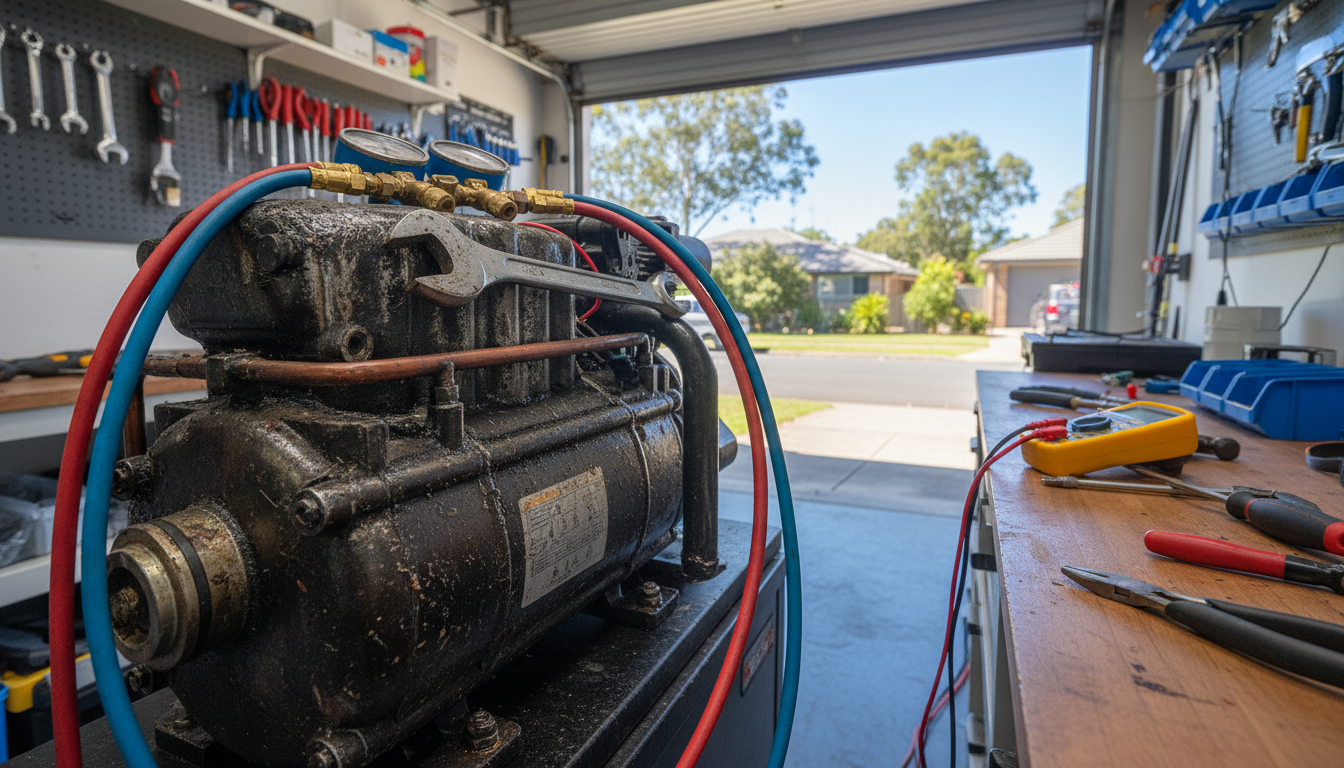
The compressor functions as the circulation pump for your refrigeration system. It compresses refrigerant gas, raising its temperature and pressure, then pushes it through the condenser coils where heat dissipates into your kitchen. The refrigerant then flows through the expansion valve, evaporates in the evaporator coils inside your fridge, absorbing heat from the interior, and returns to the compressor to repeat the cycle.
Without a functioning compressor, refrigerant cannot circulate. Your fridge will run—lights work, fans operate—but no cooling occurs. The compressor is a sealed unit containing a motor, piston assembly, and internal valving. It cycles on and off based on thermostat signals, typically running 15–20 minutes per cycle in a healthy system.
Compressors in quality brands like Samsung, Fisher & Paykel, LG, Westinghouse, and Bosch are designed to last 10–15 years under normal operating conditions. Premature failure indicates either manufacturing defect, which may be covered under the statutory guarantee of acceptable quality in Australian Consumer Law (ACL) Schedule 2 of the Competition and Consumer Act 2010 (Cth), or environmental factors like inadequate ventilation, voltage fluctuations, or refrigerant system faults.
What Causes Fridge Compressors to Fail?
Compressor failure stems from mechanical wear, electrical faults, or refrigerant system problems. Understanding the distinction is critical because many diagnosed “compressor failures” are actually repairable electrical component faults.
Compressor start relay failure is the most commonly misdiagnosed fault. The start relay provides the electrical boost needed to start the compressor motor. When it fails, you hear repeated clicking sounds as the relay attempts to engage the compressor, followed by silence when the overload protector trips. This produces identical symptoms to compressor failure—no cooling, clicking sounds, warm compressor—but costs $120–$180 to repair rather than $400–$800 for compressor replacement. The unusual noises from your fridge often indicate relay or capacitor faults rather than compressor mechanical failure.
Refrigerant leaks cause compressor failure indirectly. When refrigerant charge drops below operational levels, the compressor runs continuously attempting to maintain temperature, overheating and wearing internal components prematurely. Refrigerant leaks require both leak repair and system recharge—work that must be performed by a licensed technician under the Work Health and Safety Act 2011 (NSW) due to refrigerant handling regulations and environmental protection requirements.
Electrical voltage problems damage compressor motors. Voltage spikes, brownouts, or inadequate supply cause the motor to draw excessive current, overheating windings and causing premature failure. This is particularly common in older Sydney homes with outdated electrical systems or in areas experiencing grid instability during peak summer demand.
Inadequate ventilation forces the compressor to work harder and run longer cycles. Fridges installed in tight spaces, against walls, or with dust-clogged condenser coils cannot dissipate heat effectively. The compressor overheats, and internal lubricant breaks down, accelerating wear on moving parts.
Manufacturing defects in compressor construction occasionally cause premature failure. According to Choice, certain model years from various manufacturers have experienced higher-than-normal compressor failure rates. If your fridge is less than 5 years old and the compressor fails, you likely have rights under the statutory guarantee of acceptable quality in Australian Consumer Law, regardless of manufacturer warranty expiration.
What Are the Early Warning Signs of Compressor Failure?
Compressor failure rarely occurs without warning. Recognizing early symptoms allows intervention before complete breakdown and food spoilage.
- ✓
The fridge is not cooling adequately but you hear the compressor running continuously without cycling off—this indicates the compressor is working but cannot build sufficient pressure due to internal wear or refrigerant loss. - ✓
You hear clicking sounds every few minutes followed by silence—the compressor attempts to start but the start relay or overload protector is failing, a repairable electrical fault often misdiagnosed as compressor failure. - ✓
The compressor feels excessively hot to touch—place your hand on the lower rear panel; a working compressor feels warm, but excessive heat indicates overwork from refrigerant loss or ventilation problems. - ✓
Your electricity bills have increased noticeably—a failing compressor cycles excessively or runs continuously, and increased electricity consumption often precedes complete compressor failure by weeks or months. - ✓
You notice the fridge interior warming gradually over several days—this pattern suggests declining compressor efficiency rather than sudden electrical failure, indicating mechanical wear. - ✓
The compressor makes grinding, rattling, or buzzing sounds during operation—these indicate internal mechanical wear on bearings, pistons, or motor components.
These hidden signs of appliance failure warrant immediate professional diagnosis. Early intervention often identifies repairable faults before they cause complete compressor failure.
How Do You Diagnose a Failed Compressor vs Other Cooling Faults?
Accurate diagnosis separates true compressor failure from the many other faults that produce similar symptoms. A fridge not cooling but still running can result from thermostat failure, evaporator fan motor faults, blocked airflow, refrigerant leaks, or compressor problems.
- 1
Visual and auditory inspectionThe technician listens for compressor operation, checks for clicking sounds indicating start relay failure, and feels the compressor for temperature and vibration. A completely silent, cool compressor with power to the unit suggests electrical component failure rather than mechanical compressor breakdown.
- 2
Electrical testing of start relay and overload protectorUsing a multimeter, the technician tests continuity and resistance values in the start relay, run capacitor, and overload protector. Approximately 60% of suspected compressor failures in our Sydney service area are actually failed start relays—a $150 repair rather than $600 compressor replacement.
- 3
Compressor winding resistance testThe technician disconnects the start relay and tests resistance between the compressor motor terminals. Specific resistance values indicate healthy windings; infinite resistance or zero resistance indicates open or shorted windings requiring compressor replacement.
- 4
Amp draw measurementUsing a clamp meter, the technician measures current draw during compressor operation. High amp draw indicates mechanical binding or seized components; low amp draw suggests electrical faults or loss of refrigerant charge affecting compressor performance.
- 5
Refrigerant system pressure testingIf the compressor runs but produces no cooling, the technician connects pressure gauges to test refrigerant charge. Low pressure indicates leak; normal pressure with no cooling suggests compressor valve failure preventing pressure buildup.
This diagnostic process requires specialized equipment and refrigerant handling certification. Attempting DIY compressor diagnosis risks electrical shock, refrigerant exposure, and misdiagnosis leading to unnecessary parts replacement.
Important:
Can Fridge Compressors Be Repaired or Must They Be Replaced?
Compressors themselves cannot be repaired—they are sealed units. Internal mechanical failure requires complete compressor replacement. However, the components that control and support compressor operation can often be repaired or replaced at significantly lower cost.
Repairable electrical components include the compressor start relay ($80–$150 parts and labour), overload protector ($70–$120), run capacitor ($90–$160), and thermostat ($110–$180). These components fail more frequently than compressors and produce identical symptoms. A clicking sound followed by compressor silence almost always indicates start relay failure rather than compressor mechanical failure.
Refrigerant system repairs address leaks that cause compressor overwork and premature failure. If diagnosed early, leak repair and refrigerant recharge ($280–$450 depending on refrigerant type) prevents compressor damage. Once the compressor has run extensively with low refrigerant charge, internal damage may be irreversible, requiring compressor replacement.
Compressor replacement involves recovering existing refrigerant, cutting refrigerant lines, removing the failed compressor, brazing in a new compressor, pressure testing the system, evacuating moisture and air, and recharging with the correct refrigerant type and quantity. This work requires specialized equipment and certification, and costs $400–$800 in Sydney depending on fridge brand, compressor type, and refrigerant specification.
The qualified fridge repair technicians near you carry diagnostic equipment to differentiate between these fault types during the initial service call, providing accurate quotes for repair rather than assuming compressor replacement is necessary.
Compressor Repair vs Fridge Replacement: Cost Analysis for Sydney Households
The decision to repair or replace a fridge with compressor failure depends on appliance age, repair cost, and replacement value. The Australian Bureau of Statistics (ABS) reports that the average Australian household spends $1,200–$1,800 on a replacement fridge, making compressor repair financially sensible in many situations.
The 50% cost rule provides a practical framework: if compressor repair costs less than 50% of a comparable replacement fridge’s price, and the fridge is under 7 years old, repair typically offers better value. For a $1,500 replacement fridge, a $600 compressor repair is cost-effective if the appliance has 5–8 years of remaining service life.
Age considerations matter significantly. Fridges under 5 years old with compressor failure should almost always be repaired, particularly given your rights under the statutory guarantee of acceptable quality in Australian Consumer Law (ACL) Schedule 2 of the Competition and Consumer Act 2010 (Cth). Fridges 7–10 years old require case-by-case assessment based on overall condition, energy efficiency, and whether other components show wear. Fridges over 10 years old with compressor failure often warrant replacement, particularly given energy efficiency improvements.
Energy Rating Australia data shows that fridges manufactured after 2010 use approximately 30% less energy than older models. A 12-year-old fridge consuming $180 annually in electricity compared to a new model consuming $120 annually creates a $60 annual operating cost difference. Over 10 years, this $600 energy saving partially offsets replacement cost, making replacement more attractive for older appliances.
Additional repair needs influence the decision. If your fridge requires compressor replacement plus door gasket replacement, thermostat repair, and condenser coil cleaning, cumulative repair costs may exceed the 50% threshold, favouring replacement.
Sydney Appliance Services provides transparent cost assessment during diagnosis, comparing repair costs against replacement value and discussing your options based on appliance age, condition, and your household budget. Our technicians service all Greater Sydney areas including Bondi, Newtown, Mosman, Castle Hill, Parramatta, and surrounding suburbs, providing same-day diagnosis so you can make informed decisions quickly.
When Does Compressor Failure Require Immediate Professional Attention?
Certain compressor failure scenarios require urgent professional diagnosis to prevent food spoilage, safety hazards, or secondary damage to the refrigeration system.
Complete cooling loss in a fridge containing perishable food warrants same-day service. According to NSW Food Authority guidelines, refrigerated food held above 5°C for more than 4 hours enters the temperature danger zone for bacterial growth. When same-day fridge repair is essential, compressor failure ranks among the most urgent scenarios.
Burning smell or smoke from the compressor compartment indicates electrical fault—potentially a shorted compressor motor winding or failed start relay. Disconnect power immediately and contact a qualified technician. Continued operation risks electrical fire.
Refrigerant leak signs including hissing sounds, oily residue near compressor connections, or chemical odours require immediate professional attention. Refrigerant exposure presents health risks, and continued compressor operation with low refrigerant charge causes rapid compressor damage.
Compressor cycling rapidly (starting and stopping every few minutes) indicates overload protector activation from electrical fault, mechanical binding, or refrigerant problems. This cycling pattern damages the compressor start components and accelerates wear, requiring diagnosis before complete failure occurs.
Sydney Appliance Services offers same-day fridge compressor diagnosis across all Greater Sydney suburbs including the Eastern Suburbs (Coogee, Maroubra, Vaucluse), Inner West (Leichhardt, Marrickville, Glebe), North Shore (Cremorne, Chatswood, Willoughby), Hills District (Kellyville, Baulkham Hills, Cherrybrook), Western Suburbs (Blacktown, Seven Hills, Greystanes), and CBD areas (Surry Hills, Pyrmont, Ultimo, Waterloo). Our mobile service brings diagnostic equipment and common repair parts to your home, often completing repairs during the initial visit.
How to Prevent Compressor Failure: Maintenance Checklist
While compressor failure sometimes results from manufacturing defect or unavoidable wear, many cases stem from preventable environmental factors and maintenance neglect. This comprehensive fridge repair guide approach to maintenance extends compressor lifespan significantly.
- ✓
Clean condenser coils every 6 months—vacuum dust and debris from the coils located on the rear panel or beneath the fridge; dust buildup prevents heat dissipation, forcing the compressor to work harder and overheat. - ✓
Maintain 5–10cm clearance on all sides—fridges require airflow around the cabinet for proper heat dissipation; installation in tight spaces or against walls causes compressor overheating and premature failure. - ✓
Check door gasket seal condition annually—a worn or damaged door gasket allows warm air infiltration, forcing the compressor to run continuously; clean gaskets with warm soapy water and inspect for cracks or gaps. - ✓
Set thermostat correctly—fridge compartment should maintain 3–4°C, freezer -18°C; excessively cold settings force the compressor to work harder without benefit, accelerating wear. - ✓
Avoid overloading—excessive food storage blocks airflow inside the fridge, preventing proper cooling and forcing the compressor to run longer cycles; maintain space between items for air circulation. - ✓
Monitor compressor cycling—a healthy compressor runs 15–20 minutes then rests for similar duration; continuous running or very short cycles indicate developing faults requiring professional diagnosis. - ✓
Install a surge protector—voltage spikes damage compressor motors; a quality surge protector prevents electrical damage, particularly important in areas with unstable power supply. - ✓
Address unusual sounds immediately—clicking, grinding, or buzzing sounds indicate developing compressor or electrical component faults; early diagnosis prevents catastrophic failure and reduces repair costs.
These homeowner maintenance tasks are safe and require no specialized tools or refrigerant handling. Any maintenance involving electrical components, refrigerant system access, or compressor removal requires a qualified technician.
Your Consumer Rights Under Australian Consumer Law When a Compressor Fails
Premature compressor failure may entitle you to free repair, replacement, or refund under the statutory guarantee of acceptable quality in Australian Consumer Law (ACL) Schedule 2 of the Competition and Consumer Act 2010 (Cth), regardless of manufacturer warranty status.
The Australian Competition and Consumer Commission (ACCC) notes that consumers are entitled to repair, replacement, or refund under Australian Consumer Law when a major appliance like a fridge fails prematurely due to manufacturing defect, regardless of manufacturer warranty period. The statutory guarantee of acceptable quality requires that appliances be durable and free from defects for a reasonable period based on price paid and nature of the product.
What constitutes reasonable durability depends on the appliance. For a quality fridge from brands like Samsung, LG, Fisher & Paykel, Bosch, or Westinghouse priced at $1,500–$3,000, reasonable lifespan expectations are 10–15 years. Compressor failure within 5 years strongly suggests manufacturing defect rather than normal wear, triggering statutory guarantee rights.
Your rights apply even after manufacturer warranty expires. If you purchased a fridge with a 2-year manufacturer warranty and the compressor fails in year 4, you retain rights under ACL if the failure is premature relative to reasonable durability expectations. Contact the retailer first, as they hold primary responsibility under ACL. If the retailer refuses remedy, contact NSW Fair Trading or the ACCC for assistance.
Document all repairs and maintenance to support your claim. Retain purchase receipts, warranty documents, and records of any professional maintenance or repairs performed. This documentation demonstrates reasonable care and strengthens your position when asserting ACL rights.
Major failure vs minor failure determines your remedy options. Compressor failure typically constitutes major failure because the fridge cannot perform its primary function (refrigeration). For major failures, you can choose between replacement, refund, or repair. For minor failures, the retailer can choose the remedy but must address the fault within reasonable timeframe.
Sydney Appliance Services provides detailed diagnostic reports and repair documentation that support ACL claims when applicable. Our technicians identify whether compressor failure results from manufacturing defect, installation issues, or normal wear, providing the technical evidence needed for statutory guarantee claims.
If your fridge compressor has failed or you’ve noticed early warning signs, Sydney Appliance Services provides same-day diagnosis and repair across all Greater Sydney suburbs. Our qualified technicians carry genuine compressor parts for Samsung, LG, Fisher & Paykel, Westinghouse, and all major brands, with a 12-month repair warranty.
Same-day service available across Greater Sydney. Genuine parts. All repairs backed by warranty. We come to you.
Frequently Asked Questions About Fridge Compressor Repair in Sydney
How much does fridge compressor repair cost in Sydney?
Compressor replacement in Sydney typically costs $400–$800 including parts, labour, and refrigerant recharge, depending on fridge brand and refrigerant type. Under Australian Consumer Law (ACL) Schedule 2 of the Competition and Consumer Act 2010 (Cth), if your fridge is less than 5 years old and the compressor fails due to manufacturing defect, you may be entitled to free repair or replacement under the statutory guarantee of acceptable quality. Sydney Appliance Services provides upfront quotes and same-day diagnosis across Greater Sydney.
Can a fridge compressor be repaired or does it need replacing?
Compressors themselves cannot be repaired—a failed compressor must be replaced entirely. However, related components like the compressor start relay, overload protector, or capacitor can often be repaired or replaced at lower cost if diagnosed early. A qualified technician can differentiate between compressor failure and repairable electrical faults through resistance testing and amp draw measurement.
How long should a fridge compressor last?
A quality fridge compressor should last 10–15 years under normal operating conditions. According to Choice, premature compressor failure is often caused by inadequate ventilation, refrigerant leaks, or electrical voltage fluctuations. If your compressor fails within the expected lifespan, you may have rights under the statutory guarantee of acceptable quality in Australian Consumer Law.
What are the signs my fridge compressor is failing?
Common signs include the fridge not cooling adequately, compressor running continuously without cycling off, clicking sounds followed by silence (start relay failure), or the compressor feeling unusually hot to touch. If you notice these symptoms, immediate diagnosis prevents complete failure and food spoilage—Sydney Appliance Services offers same-day compressor diagnosis across all Sydney suburbs.
Is it worth replacing a compressor or should I buy a new fridge?
If your fridge is under 7 years old, well-maintained, and the compressor replacement costs less than 50% of a comparable new fridge, repair is typically cost-effective. For fridges over 10 years old with additional wear (door gasket deterioration, thermostat faults), replacement may offer better long-term value and improved energy efficiency under current Energy Rating Australia standards.