
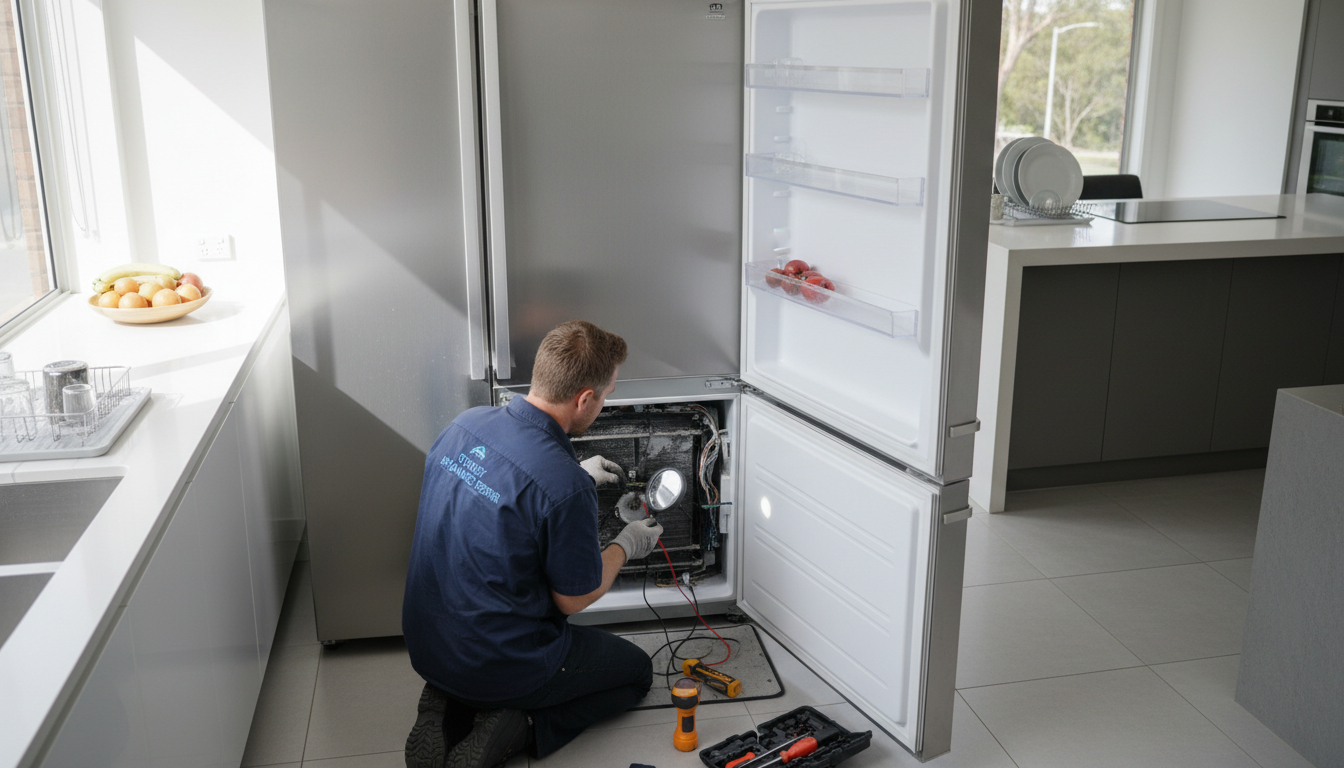
Many Sydney homeowners call for a freezer repair service assuming their freezer has failed independently, only to discover the fault lies in a shared refrigeration system serving both compartments. Modern refrigerators use a single compressor, evaporator coil assembly, and refrigerant circuit to cool both the fridge and freezer, meaning a component failure in one zone often signals a system-wide problem. Understanding how these shared components interact helps you identify whether you need targeted fridge repair or a more comprehensive system diagnosis.
According to the Australian Bureau of Statistics, refrigerators are present in 99.9% of Australian households, making cooling system faults one of the most urgent domestic appliance emergencies. Under Schedule 2 of the Competition and Consumer Act 2010 (Cth), the statutory guarantee of acceptable quality requires appliances to maintain proper temperature control across all compartments. Your right to repair under the Australian Consumer Law (ACL) may apply if your appliance is relatively new and experiencing shared system failures that prevent normal operation.
By the Numbers
- STATAccording to Choice, refrigerator compressors should last 10-15 years under normal conditions, but premature failure can occur due to voltage fluctuations common in some Sydney suburbs
- STATEnergy Rating Australia notes that a fridge with a failing sealed system can consume up to 30% more electricity while struggling to maintain temperature
How the Shared Refrigeration System Works
Most domestic refrigerators sold in Australia use a single-compressor design where one sealed refrigeration system serves both the fridge and freezer compartments. The compressor circulates refrigerant through evaporator coils, typically located in the freezer section or behind a shared rear panel. Cold air generated at the evaporator is then distributed to both compartments through a series of vents, dampers, and a single evaporator fan motor.
The air damper—a motorised or manually adjustable flap between compartments—controls how much cold air flows from the freezer into the fridge section. A thermostat or electronic temperature sensor monitors conditions in one or both compartments and signals the compressor and fan motor to cycle on or off. This interdependent design means a fault in any shared component affects cooling performance across the entire appliance, which is why a fridge not cooling but running often indicates a problem that also impacts freezer performance.
In Sydney’s climate, where summer temperatures regularly exceed 30°C and humidity levels fluctuate, the refrigeration system works harder to maintain set temperatures. Dust accumulation on condenser coils, voltage variations in older suburbs like Marrickville or Ashfield, and frequent door openings all stress shared components, accelerating wear on the compressor, fan motor, and defrost system.
Compressor Failure: When Both Compartments Stop Cooling
The compressor is the heart of the refrigeration system, pressurising and circulating refrigerant through the sealed circuit. When the compressor fails, refrigerant stops flowing, and both the fridge and freezer gradually warm to ambient temperature. Early symptoms include the compressor running continuously without achieving temperature, clicking sounds as the compressor start relay attempts to engage, or complete silence if the compressor motor has seized.
Compressor failure typically results from electrical faults in the motor windings, mechanical seizure due to lack of lubrication, or failure of the compressor start relay. In brands like Samsung and LG, inverter compressor designs can fail due to PCB faults that prevent the variable-speed motor from operating correctly. Voltage spikes common in areas like Penrith or Blacktown can damage compressor windings over time, leading to premature failure even in appliances under seven years old.
Because compressor failure affects both compartments, you will notice food spoiling in both the fridge and freezer simultaneously. The compressor may feel unusually hot to the touch, or you may detect a burning smell near the rear of the appliance. Compressor replacement requires refrigerant recovery, vacuum testing, and recharging—all tasks that must be performed by a licensed technician under the Work Health and Safety Act 2011 (NSW).
Blocked or Frozen Evaporator Coils
The evaporator coils are where refrigerant absorbs heat from the air inside the appliance. These coils are located behind a panel in the freezer section or at the rear of the shared cooling cavity. During normal operation, a thin layer of frost forms on the coils and is periodically melted by the defrost heater. When the defrost system fails or airflow is restricted, ice builds up on the coils, blocking airflow and preventing cold air from reaching either compartment.
Homeowners often notice the freezer stops freezing first because it relies on direct airflow from the evaporator. The fridge may remain partially cool for a time as residual cold air circulates, but eventually both compartments warm. Brands like Fisher & Paykel and Westinghouse commonly experience Fisher & Paykel cooling system deterioration due to evaporator coil icing caused by defrost timer or defrost heater failure.
You can sometimes hear the evaporator fan motor running but feel no cold air from the vents, indicating the coils are blocked with ice. Removing the rear panel in the freezer (after unplugging the appliance) may reveal a solid block of ice covering the coils. While you can manually defrost the appliance by leaving it unplugged with doors open for 24 hours, this only addresses the symptom. The underlying defrost system fault—whether a failed defrost heater, defrost thermostat, or defrost timer—must be repaired to prevent recurrence.
Evaporator Fan Motor Faults
The evaporator fan motor circulates cold air from the evaporator coils through both the freezer and fridge compartments. When this fan fails, cold air remains trapped near the evaporator, and neither compartment receives adequate airflow. The compressor continues to run, the evaporator coils may frost over due to lack of air movement, and you will notice the freezer gradually warming despite the appliance appearing to operate normally.
Fan motor failure often produces diagnostic sounds before complete failure. You may hear grinding, squealing, or intermittent clicking as the motor struggles to turn. In some cases, ice buildup on the fan blades prevents rotation, causing the motor to hum without spinning. These unusual noises from your fridge provide early warning that the fan motor or its mounting is failing.
Brands like LG and Bosch use brushless DC fan motors that can fail due to bearing wear or electronic control faults. In humid Sydney conditions, moisture infiltration can corrode motor windings or cause ice to form around the fan assembly. A qualified technician can test the fan motor for continuity, check for obstructions, and replace the motor assembly using genuine parts to restore proper airflow throughout the system.
Thermostat and Temperature Control Failures
The thermostat or electronic temperature sensor monitors compartment temperature and signals the compressor and fan motor to cycle on or off. In mechanical thermostat designs, a gas-filled sensing bulb detects temperature changes and opens or closes electrical contacts. In electronic systems, an NTC sensor (negative temperature coefficient thermistor) sends resistance values to the main PCB, which then controls compressor and fan operation.
When the thermostat fails in the open position, the compressor never receives a signal to start, and both compartments warm to room temperature. If it fails in the closed position, the compressor runs continuously, over-cooling both compartments and causing excessive frost buildup. In dual-thermostat systems where each compartment has its own sensor, failure of the freezer thermostat may cause only the freezer to stop cooling while the fridge continues operating normally.
Electronic NTC sensors can drift out of calibration or fail completely, sending incorrect temperature readings to the control board. This is particularly common in Samsung and Electrolux models where the sensor is exposed to moisture or frost buildup. Replacing a failed thermostat or NTC sensor is a straightforward repair that restores proper temperature control across both compartments, and Sydney Appliance Services carries genuine replacement sensors for all major brands.
Refrigerant Leaks Affecting Both Zones
The sealed refrigeration system contains a precise charge of refrigerant that circulates through the compressor, condenser coils, expansion device, and evaporator coils. A leak anywhere in this sealed circuit causes refrigerant pressure to drop, reducing the system’s ability to absorb and transfer heat. As refrigerant escapes, both the fridge and freezer gradually lose cooling capacity, and the compressor runs continuously in a futile attempt to maintain temperature.
Refrigerant leaks commonly occur at brazed joints in the evaporator or condenser coils, at the compressor discharge or suction connections, or due to corrosion in the aluminium evaporator coils used in some Whirlpool and Haier models. You may notice an oily residue near leak points, though small leaks often show no visible signs. The compressor may feel warm but not hot, and both compartments will be warmer than their set temperatures despite the appliance running constantly.
Energy Rating Australia notes that a fridge with a failing sealed system can consume up to 30% more electricity while struggling to maintain temperature. Repairing a refrigerant leak requires locating the leak point, brazing or replacing the damaged section, vacuum testing the system to remove moisture and air, and recharging with the correct refrigerant type and quantity. This work must be performed by a licensed technician, and Sydney Appliance Services provides same-day leak detection and repair across suburbs including Parramatta, Liverpool, and Sutherland Shire.
Defrost System Failures That Impact Freezer Performance
The defrost system prevents excessive ice buildup on the evaporator coils by periodically heating the coils to melt accumulated frost. This system includes a defrost heater (usually a resistance heating element), a defrost thermostat or temperature fuse that limits heater temperature, and a defrost timer or adaptive defrost control board that initiates defrost cycles at regular intervals.
When any component of the defrost system fails, frost accumulates on the evaporator coils, progressively blocking airflow. The freezer shows symptoms first because it relies on direct airflow from the evaporator. You may notice the freezer gradually warming over several days, frost buildup visible through freezer vents, or the fridge remaining cool while the freezer fails to maintain temperature. This pattern indicates a defrost system fault rather than a compressor or refrigerant problem.
In Fisher & Paykel and Westinghouse models, the defrost heater element can fail due to thermal cycling stress, while the defrost thermostat may fail in the open position, preventing the heater from activating. Adaptive defrost systems in newer Samsung and LG models rely on door opening frequency and compressor run time to determine defrost intervals, and PCB faults can prevent defrost cycles from initiating. A technician can test each defrost component for continuity and replace failed parts to restore proper defrost operation.
Early Warning Signs of Shared System Problems
Recognising early symptoms of shared system faults allows you to arrange repairs before complete cooling failure and food spoilage. Many homeowners overlook subtle changes in appliance performance until both compartments fail completely, but several diagnostic indicators provide advance warning of developing problems.
One compartment cooling poorly while the other maintains temperature often indicates a blocked air damper, failed evaporator fan motor, or developing defrost system fault. The compressor running continuously without achieving set temperatures suggests low refrigerant charge, blocked condenser coils, or a failing compressor. Frost buildup visible around freezer vents or on food packages indicates defrost system failure. Unusual sounds—grinding, squealing, clicking, or buzzing—point to fan motor, compressor start relay, or compressor bearing faults.
Increased electricity consumption without obvious cause may indicate the compressor is working harder due to refrigerant loss or condenser coil blockage. Water pooling inside the fridge or under the appliance can result from a blocked defrost drain, but may also indicate excessive frost melt from a failing defrost system. These early warning signs of appliance failure warrant professional diagnosis before the fault progresses to complete system failure.
Safe homeowner checks include cleaning condenser coils if accessible, ensuring door seals are intact and sealing properly, checking that vents inside both compartments are not blocked by food items, and verifying the appliance is level and has adequate clearance for airflow. Any fault involving electrical components, refrigerant, or internal sealed system parts requires a qualified technician.
When to Call for Professional Freezer Repair Service in Sydney
Shared refrigeration system faults require diagnostic equipment and technical knowledge beyond typical homeowner capability. A qualified technician can measure refrigerant pressures, test electrical components for continuity and correct operation, and identify whether a fault is localised to one component or indicates broader system failure. Attempting DIY repairs on sealed refrigerant systems or mains-connected electrical components risks personal injury, refrigerant release, and further damage to the appliance.
You should arrange professional repair immediately when both compartments stop cooling, when you hear unusual sounds from the compressor or fan motor, when frost buildup blocks airflow despite manual defrosting, or when the compressor runs continuously without achieving temperature. Under Schedule 2 of the Competition and Consumer Act 2010 (Cth), appliances must be of acceptable quality and fit for purpose, and your right to repair under the Australian Consumer Law (ACL) may apply if the appliance is relatively new and experiencing major failures.
The Australian Competition and Consumer Commission (ACCC) provides guidance on consumer guarantees and your rights when appliances fail prematurely. For appliances under warranty, contact the manufacturer or retailer first. For out-of-warranty appliances or when you need faster service, Sydney Appliance Services provides same-day freezer repair service across all Greater Sydney suburbs, from the Northern Beaches to Campbelltown and from the Eastern Suburbs to the Blue Mountains.
Before the technician arrives, note when symptoms first appeared, whether one or both compartments are affected, any unusual sounds or smells, and whether the compressor is running. This information helps the technician diagnose the fault efficiently. Our guide on what to do in the first 30 minutes provides specific steps to protect food and prepare for the repair visit.
For urgent cooling failures where food safety is at risk, understanding when you need same-day fridge repair helps you assess whether to wait for a scheduled appointment or request immediate service. Sydney Appliance Services carries genuine replacement parts for Samsung, Fisher & Paykel, LG, Westinghouse, Bosch, Electrolux, and all major brands, allowing us to complete most repairs in a single visit.
Frequently Asked Questions
Why is my freezer not freezing but my fridge is still cold?
This typically indicates a blocked air damper between compartments, a failed evaporator fan motor, or frozen evaporator coils restricting airflow to the freezer. The fridge may remain partially cool because it receives residual cold air or has a separate temperature sensor that keeps the compressor running. Under the statutory guarantee of acceptable quality in Schedule 2 of the Competition and Consumer Act 2010 (Cth), appliances must maintain proper temperature control in all compartments, and Sydney Appliance Services can diagnose and repair these faults same-day across Greater Sydney using genuine replacement parts.
Can a faulty compressor affect just the freezer?
No—the compressor circulates refrigerant through the entire sealed system serving both compartments. If the compressor fails, both fridge and freezer will eventually stop cooling, though symptoms may appear in one compartment first depending on thermostat location and airflow design. The compartment monitored by the thermostat may show symptoms earlier, but complete compressor failure always affects the entire refrigeration system. A qualified technician can test compressor function, refrigerant pressures, and electrical supply to determine whether the compressor requires replacement or if another component is causing the cooling failure.
How do I know if my fridge has a refrigerant leak?
Common signs include both compartments gradually warming over several days, the compressor running continuously without achieving temperature, reduced cooling capacity despite the appliance appearing to operate normally, and sometimes an oily residue near coils or brazed connections. You may also notice increased electricity consumption as the compressor works harder with insufficient refrigerant. Refrigerant leaks require licensed technician repair under the Work Health and Safety Act 2011 (NSW), and Sydney Appliance Services provides same-day leak detection, repair, and regas service across all Greater Sydney suburbs using genuine refrigerants appropriate for your appliance model.
Is it worth repairing a fridge with freezer cooling problems?
For appliances under 7-10 years old, repairing shared system faults like evaporator fan motors, thermostats, defrost components, or even compressors is typically cost-effective compared to replacement. According to Choice, refrigerator compressors should last 10-15 years under normal conditions, meaning premature failure may indicate a repairable fault rather than end-of-life wear. Your right to repair under the Australian Consumer Law (ACL) may also apply if the appliance is relatively new, and the Australian Competition and Consumer Commission (ACCC) provides guidance on consumer guarantees for major appliances. Sydney Appliance Services provides transparent repair-versus-replace advice based on fault diagnosis, appliance age, and repair cost, and all repairs are backed by warranty for your peace of mind.
If your freezer isn’t freezing or you suspect a shared cooling system fault, Sydney Appliance Services provides same-day freezer repair service across all Greater Sydney suburbs. Our technicians diagnose compressor, evaporator, and refrigerant faults on-site and carry genuine parts for Samsung, Fisher & Paykel, LG, Westinghouse, and all major brands.
Same-day service available across Greater Sydney. Genuine parts. All repairs backed by warranty. We come to you.