
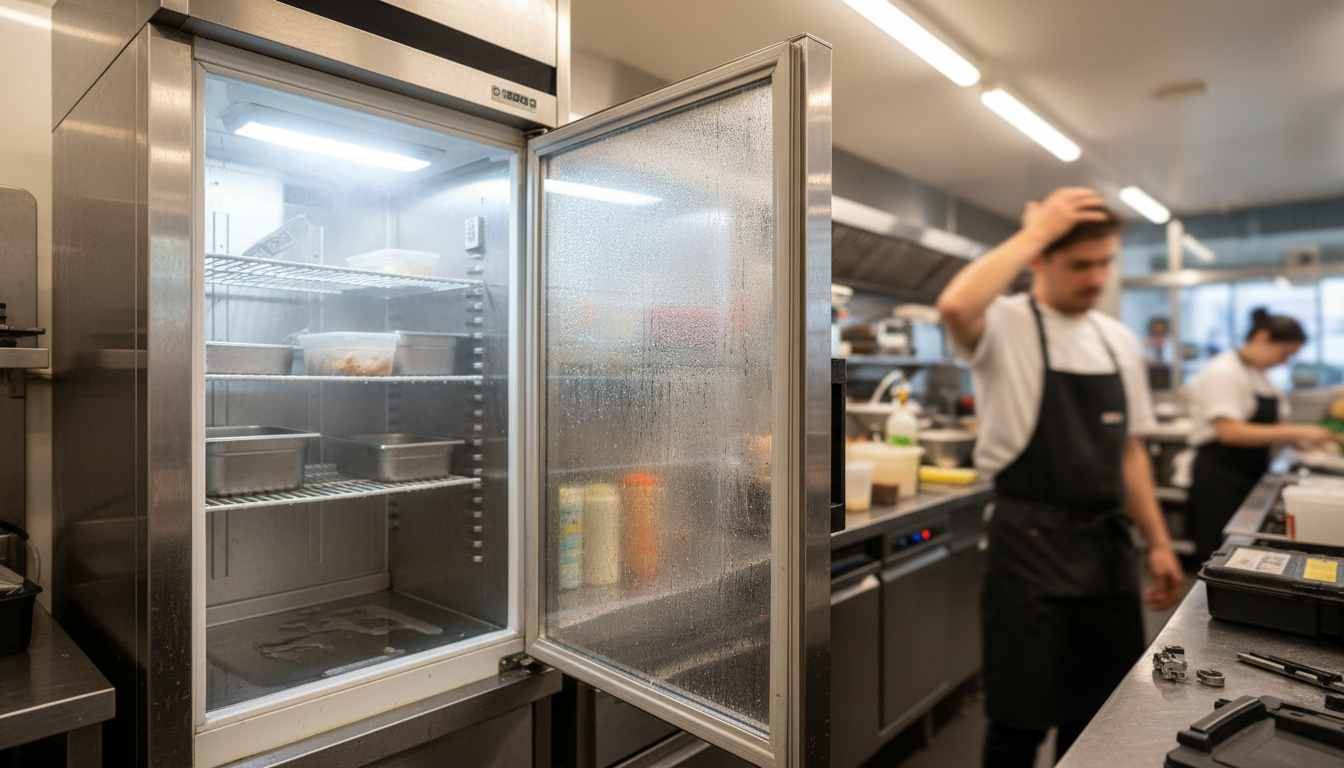
Commercial fridge breakdowns create immediate business disruption for Sydney cafes, restaurants, supermarkets, and food retailers. When a commercial refrigeration unit fails, the cost extends far beyond the commercial fridge repair itself—spoiled stock, lost revenue, and potential breaches of NSW Food Authority requirements under the Food Act 2003 (NSW) create urgent operational and legal pressure. According to the Australian Bureau of Statistics (ABS), food retail and hospitality businesses account for over 480,000 enterprises nationally, with commercial refrigeration failures cited as a leading cause of unplanned operational downtime. Understanding the specific faults that cause commercial fridge failures—compressor breakdown, thermostat malfunction, door gasket failure, and refrigerant loss—helps Sydney business operators respond quickly and make informed repair decisions under Australian Consumer Law (ACL) Schedule 2 of the Competition and Consumer Act 2010 (Cth).
Why Commercial Fridge Breakdowns Cost Sydney Businesses More Than Repair Fees
The true cost of commercial fridge downtime extends well beyond the technician’s invoice. Spoiled stock represents immediate financial loss—a single breakdown during peak trading can result in thousands of dollars of wasted inventory for restaurants in Surry Hills or Newtown. Food safety compliance adds another layer of urgency. The NSW Food Authority requires refrigerated goods to be stored below 5°C, and any lapse creates potential liability under the Food Act 2003 (NSW). Business interruption compounds the problem—cafes in Bondi or Coogee operating without refrigeration during summer service periods face lost revenue, customer dissatisfaction, and reputational damage that persists long after the unit is repaired.
The Australian Competition and Consumer Commission (ACCC) reports that commercial appliance complaints increased 23% between 2020 and 2022, with refrigeration equipment failures representing the highest proportion of urgent business-related claims. Energy costs also escalate during partial failures—a commercial fridge with a failing door gasket or blocked condenser coil can consume 30–50% more electricity while failing to maintain safe temperatures. For businesses operating multiple units across locations in Parramatta or Chatswood, these efficiency losses accumulate rapidly.
By the Numbers
- STATAccording to the Australian Bureau of Statistics (ABS), food retail and hospitality businesses account for over 480,000 enterprises nationally, with commercial refrigeration failures cited as a leading cause of unplanned operational downtime.
- STATThe Australian Competition and Consumer Commission (ACCC) reports that commercial appliance complaints increased 23% between 2020 and 2022, with refrigeration equipment failures representing the highest proportion of urgent business-related claims.
- STATChoice testing data shows that commercial-grade compressors typically last 10–15 years under normal use, but inadequate condenser coil maintenance can reduce lifespan by up to 40%, leading to premature failure.
Compressor Failure: The Most Expensive Breakdown
Compressor failure represents the most costly commercial fridge breakdown, with replacement costs typically ranging from $800 to $2,500 depending on unit capacity and refrigerant type. The compressor circulates refrigerant through the sealed system, and when it fails, the entire cooling process stops. However, not all compressor-related breakdowns require full compressor replacement. The compressor start relay—a small electrical component that provides the initial power surge to start the compressor motor—fails more frequently than the compressor itself and costs substantially less to replace at $150–$350 including labour.
Distinguishing between compressor start relay failure and actual compressor motor failure requires technical diagnosis. If the compressor clicks repeatedly but fails to start, or if it hums without running, the start relay or overload protector has likely failed. If the compressor remains completely silent despite power supply, or if it runs continuously without cycling off, the compressor motor itself may have failed. Choice testing data shows that commercial-grade compressors typically last 10–15 years under normal use, but inadequate condenser coil maintenance can reduce lifespan by up to 40%, leading to premature failure. For detailed technical guidance on distinguishing these faults, refer to our compressor failure diagnosis and repair options.
Important:
Thermostat and Temperature Control Faults
Thermostat and NTC sensor failures cause commercial fridges to lose accurate temperature control, creating immediate food safety risks. The thermostat monitors internal temperature and signals the compressor to cycle on and off to maintain the set point. When the thermostat or its associated NTC (negative temperature coefficient) sensor fails, the fridge may run continuously without reaching target temperature, cycle too frequently, or fail to activate cooling at all. Temperature fluctuations beyond 2°C indicate control system failure requiring urgent attention.
Commercial fridges displaying error codes, showing wildly inaccurate temperature readings, or maintaining temperatures above 5°C breach NSW Food Authority safe storage requirements and create liability under the Food Act 2003 (NSW). The control PCB (printed circuit board) may also fail, disrupting communication between the thermostat, sensors, and compressor. These electronic control failures often present as intermittent faults—the unit may cool normally for hours before suddenly losing temperature control. For businesses in the Eastern Suburbs or Inner West experiencing cooling inconsistency despite a running compressor, understanding the hidden causes of cooling failures helps identify whether thermostat, sensor, or PCB replacement is required.
Door Gasket Failure and Cold Air Loss
Door gasket failure causes continuous cold air loss, forcing the compressor to run longer cycles and increasing energy consumption by 30–50%. The door gasket—the flexible rubber seal around the door perimeter—creates an airtight barrier when the door closes. Over time, gaskets become brittle, torn, or lose their magnetic properties, allowing warm air infiltration and cold air escape. This seemingly minor fault creates cascading problems: the compressor works harder to compensate for temperature loss, condensation forms inside the cabinet, and internal temperatures fluctuate beyond safe food storage limits.
Business operators can perform a simple paper test to check gasket integrity: close the door on a sheet of paper and pull gently—the paper should resist. If it slides out easily at any point around the door perimeter, the gasket has failed. Visual inspection may reveal tears, gaps, or areas where the gasket has pulled away from the door frame. For commercial units in high-use environments like cafes in Glebe or restaurants in Mosman, door gaskets typically require replacement every 3–5 years. The repair cost of $180–$400 for gasket replacement is substantially lower than the accumulated energy waste and potential food spoilage from operating with a failed seal.
- ✓
Inspect door gaskets for tears, gaps, or loss of magnetic seal—run a paper test by closing the door on a sheet of paper and pulling gently; it should resist - ✓
Feel for cold air leakage around door seals and check internal temperature with an independent thermometer—commercial fridges must maintain below 5°C for food safety compliance - ✓
Test door closure—if the door doesn’t self-close from a 45-degree angle or requires force to seal, hinges or gaskets need immediate attention to prevent cold air loss - ✓
Check for water pooling inside or beneath the unit—blocked drain tubes or failed door gaskets allow condensation and compromise food storage safety
Evaporator Fan and Condenser Coil Issues
Evaporator fan motor failure and blocked condenser coils cause inadequate airflow, preventing proper heat exchange and reducing cooling capacity. The evaporator fan circulates cold air throughout the cabinet interior, while the condenser coil at the rear or base of the unit dissipates heat from the refrigeration system. When the evaporator fan fails, cold air remains stagnant around the evaporator coils, causing frost buildup and uneven cooling—items near the front of the cabinet may be warm while those at the back freeze solid.
Condenser coil blockage from dust, grease, or debris restricts airflow and forces the compressor to work harder, increasing operating temperature and accelerating wear. Commercial kitchens in high-traffic areas like Pyrmont or Ultimo accumulate airborne contaminants rapidly, requiring quarterly condenser cleaning to maintain efficiency. Unusual noises—grinding, squealing, or rattling—often indicate evaporator fan bearing failure or debris interference. For guidance on identifying specific noise patterns and their causes, see our guide to diagnosing unusual fridge noises.
- 1
Check Condenser Coil CleanlinessExamine condenser coils at the rear or base—heavy dust buildup restricts airflow and causes overheating, leading to compressor failure and refrigerant pressure issues. This is a safe visual check business operators can perform.
- 2
Listen for Evaporator Fan OperationWith the door closed, listen for the evaporator fan running inside the cabinet. Silence when the compressor is running, or grinding and squealing noises, indicate fan motor failure requiring replacement by a qualified technician.
- 3
Inspect for Frost BuildupLook for frost buildup on evaporator coils or inside the cabinet—this indicates evaporator fan failure, defrost timer malfunction, or refrigerant charge loss. All require professional diagnosis and repair.
Refrigerant Leaks and Charge Loss
Refrigerant leaks cause gradual cooling capacity loss and eventual complete breakdown. The sealed refrigeration system contains a precise refrigerant charge that absorbs heat inside the cabinet and releases it through the condenser coil. When refrigerant leaks from corroded pipes, damaged coil connections, or failed seals, the system loses cooling capacity progressively. Early symptoms include longer compressor run times, reduced cooling performance, and frost patterns on specific sections of the evaporator coil rather than uniform coverage.
Refrigerant work requires a licensed refrigeration technician under Australian Refrigerant Handling Licence requirements. Attempting to recharge a system without identifying and repairing the leak source wastes money and refrigerant while failing to resolve the underlying fault. Commercial fridges using older R22 refrigerant face additional complications—this refrigerant has been phased out under the Montreal Protocol, making recharge expensive and replacement often more economical. For newer units using R134a or R600a refrigerant, leak repair and recharge typically costs $400–$800 depending on leak location and refrigerant quantity required.
Important:
When Commercial Fridge Downtime Becomes a Business Emergency
Commercial fridge breakdown becomes a business emergency when internal temperature exceeds 5°C for more than two hours, creating immediate food safety liability under the Food Act 2003 (NSW). The NSW Food Authority requires businesses to maintain refrigerated goods below 5°C and frozen goods below -15°C. Temperature breaches require immediate action—affected stock must be assessed for safety, and refrigeration must be restored or alternative cold storage arranged. For restaurants in Castle Hill or Kellyville operating during peak service periods, even four hours of downtime can result in complete stock loss and service cancellation.
Same-day commercial fridge repair becomes critical in these scenarios. Sydney Appliance Services provides urgent commercial refrigeration service across all Greater Sydney suburbs, carrying genuine parts for Samsung, Fisher & Paykel, LG, Westinghouse, and other major commercial brands to minimize business disruption. Understanding when same-day commercial fridge repair is critical helps business operators make rapid decisions that protect stock value and maintain compliance.
Commercial fridge breakdown affecting food safety or business operations? We provide same-day commercial fridge repair across Greater Sydney.
Same-day service available across Greater Sydney. Genuine parts. All repairs backed by warranty. We come to you.
Early Warning Signs Your Commercial Fridge Is Failing
Recognizing early warning signs of commercial fridge failure allows businesses to schedule repairs before complete breakdown occurs. Temperature fluctuations represent the most critical early indicator—if internal temperature varies by more than 2°C or the digital display shows intermittent error codes, the thermostat, NTC sensor, or control PCB is failing. Increased compressor run time indicates the unit is working harder to maintain temperature due to refrigerant loss, condenser coil blockage, or door gasket failure.
Unusual noises signal component wear—grinding from the evaporator fan motor, clicking from a failing compressor start relay, or rattling from loose internal components all indicate impending failure. Condensation or frost buildup inside the cabinet suggests door seal failure or defrost system malfunction. Water pooling beneath the unit indicates blocked drain tubes or gasket failure allowing moisture infiltration. For comprehensive guidance on identifying problems before they cause downtime, review our article on early warning signs of appliance failure.
- ✓
Check the thermostat display—if temperature readings fluctuate by more than 2°C or show error codes, the NTC sensor or control PCB may have failed - ✓
Listen for compressor cycling—if the compressor runs continuously without shutting off, or fails to start at all, suspect compressor start relay or overload protector failure - ✓
Look for frost buildup on evaporator coils or inside the cabinet—this indicates evaporator fan failure, defrost timer malfunction, or refrigerant charge loss
Repair vs Replace: Making the Right Decision for Your Business
The repair versus replacement decision for commercial fridges depends on unit age, repair cost as a percentage of replacement value, and remaining serviceable lifespan. As a general guideline, if repair costs exceed 50% of replacement value and the unit is over 10 years old, replacement typically offers better long-term value. However, this calculation must account for business-specific factors—a quality Fisher & Paykel or Westinghouse commercial unit with a failed door gasket or thermostat may deliver another 3–5 years of reliable service after a $300–$500 repair.
Under Australian Consumer Law (ACL) Schedule 2 of the Competition and Consumer Act 2010 (Cth), commercial appliances carry the statutory guarantee of acceptable quality. If a major failure occurs within a reasonable timeframe relative to price and quality—typically 5–7 years for commercial refrigeration equipment—businesses retain the right to repair, replacement, or refund regardless of manufacturer warranty expiry. NSW Fair Trading data indicates that businesses often misunderstand their rights under Australian Consumer Law (ACL), with many unaware that statutory guarantees apply to commercial appliances regardless of manufacturer warranty expiry. The ACCC provides detailed guidance on exercising these rights when suppliers resist warranty claims.
Preventative Maintenance to Reduce Commercial Fridge Downtime
Scheduled preventative maintenance significantly reduces commercial fridge breakdown frequency and extends equipment lifespan. Quarterly condenser coil cleaning removes dust and grease buildup that restricts airflow and causes compressor overheating. This simple maintenance task—which business operators can perform or include in commercial cleaning contracts—prevents the majority of premature compressor failures. Door gasket inspection and cleaning should occur monthly in high-use environments. Gaskets accumulate food residue and grease that prevent proper sealing, and early replacement at the first sign of wear costs far less than the energy waste and potential breakdown from continued operation with a compromised seal.
Temperature monitoring using independent thermometers provides early warning of control system drift before it causes food safety breaches. Commercial operations in Baulkham Hills or Cherrybrook should log internal temperatures daily, noting any fluctuations beyond normal range. Annual professional inspection by a licensed refrigeration technician identifies refrigerant charge levels, compressor performance, electrical component condition, and sealed system integrity before minor issues escalate to complete failure. For comprehensive maintenance protocols, refer to our comprehensive fridge maintenance guide.
Frequently Asked Questions
How quickly can I get commercial fridge repair in Sydney?
Sydney Appliance Services provides same-day commercial fridge repair across Greater Sydney for urgent breakdowns affecting food safety and business operations. We carry genuine parts for Samsung, Fisher & Paykel, LG, Westinghouse, and other major commercial brands to minimize downtime.
What are my rights if a commercial fridge breaks down under warranty?
Under Australian Consumer Law (ACL) Schedule 2 of the Competition and Consumer Act 2010 (Cth), commercial fridges must meet the statutory guarantee of acceptable quality. If a major failure occurs, you’re entitled to repair, replacement, or refund regardless of manufacturer warranty terms.
How much does commercial fridge compressor repair cost in Sydney?
Commercial fridge compressor replacement typically costs $800–$2,500 depending on unit size and refrigerant type. Sydney Appliance Services provides upfront quotes and can assess whether compressor start relay replacement (a much cheaper repair at $150–$350) might resolve the fault first.
Can a faulty thermostat cause food safety issues in commercial fridges?
Yes—a failed NTC sensor or thermostat can cause temperature fluctuations that breach NSW Food Authority safe storage requirements (below 5°C for refrigerated goods). This creates immediate food safety risks and potential liability under the Food Act 2003 (NSW).
Should I repair or replace a 10-year-old commercial fridge?
If repair costs exceed 50% of replacement value and the unit is over 10 years old, replacement is usually more cost-effective. However, compressor start relay, door gasket, or thermostat repairs on quality brands like Fisher & Paykel or Westinghouse often extend lifespan by 3–5 years at reasonable cost.
If your commercial fridge breakdown is affecting food safety or business operations, Sydney Appliance Services provides same-day commercial fridge repair across all Greater Sydney suburbs. Our technicians carry genuine parts for all major brands and deliver repairs backed by warranty.
Same-day service available across Greater Sydney. Genuine parts. All repairs backed by warranty. We come to you.